)
)
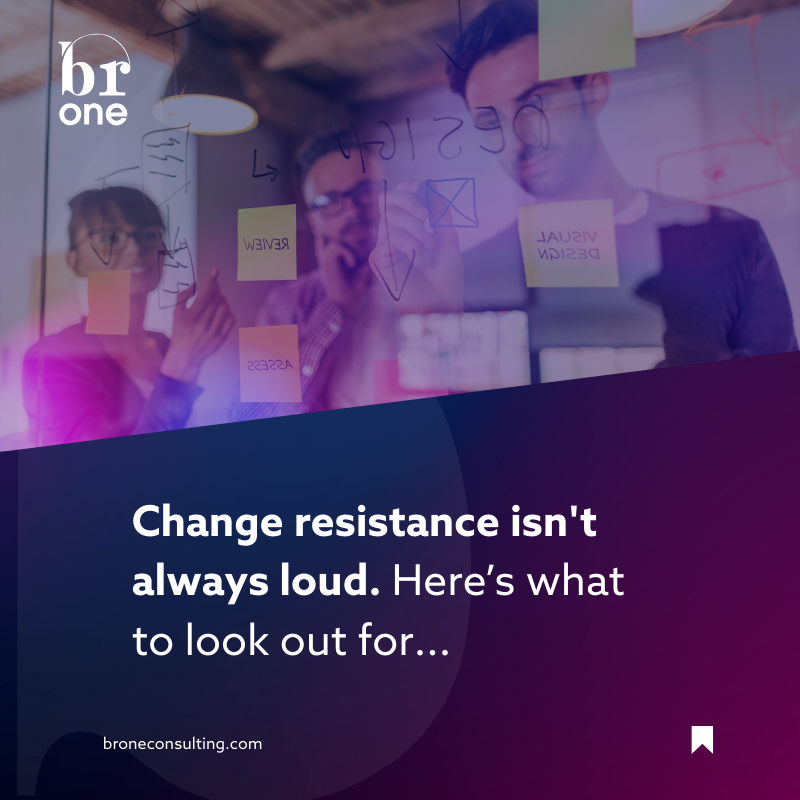
Change resistance isn't always loud. Here’s what to look out for...
Actively listen to concerns
Resistance often starts small. Maybe as a comment in a workshop, a worried email, or a quiet sigh in a meeting that’s nearly overlooked. Listen carefully to these concerns, even if they seem minor.
We encourage teams to approach every concern as important. Understanding the human experience behind resistance allows change management consultants to address problems before they escalate and to show employees that their perspectives are valued.
Empathise & validate
When a team member raises a concern, you have to acknowledge it. Try to empathise with them and validate their assertion by demonstrating an understanding of why they feel uneasy. Also express how their perspective fits into the larger context.
We help clients frame resistance in a positive light. We do this by highlighting how change can improve workflows. Whether this is through reducing time, frustration or creating new opportunities. When teams feel like they’re being heard, they are more likely to engage positively.
Follow up with action
Empty promises breed mistrust and can often make resistance worse. If a concern requires follow-up, make sure it happens quickly. Whether this is through some form of clarification, a tweak to a workflow, or a meeting to discuss the issue further.
Connect the dots across teams
Resistance rarely exists in isolation. It can hop across departments and climb hierarchies, which is why breaking through silos and connecting the dots across the organisation is important when it comes to addressing concerns effectively.
BR One’s change management approach ensures that concerns are escalated and resolved at the right level. By actively working across teams, we guide stakeholders to see the full picture and understand how their work contributes to the implementation’s success.
Repeat & reinforce
Change takes time. Far longer than the initial project timeline. Resistance can appear at different stages, from initial training to post-go-live adjustments. Addressing resistance once is not enough. The process of listening, empathising, following up and connecting teams needs to be repeated throughout the transformation.
The earlier you start involving people, the easier it is to manage when resistance arises. The longer you wait, the more entrenched concerns become.
Why resistance management matters
Resistance is a natural part of change. Ignoring it or treating it as a formality risks delaying adoption and undermining the benefits of your implementation.
Effective resistance management is proactive and centred around people. It ensures teams feel heard, supported and empowered to work with the new system. At BR One, we guide organisations through every stage of this process, helping change thrive and ROI to be realised.